 cyber security, cyber threats, NOC service, SOC service
 Why UAE Banks Need Ransomware Protection Beyond Traditional Antivirus
Introduction
The UAE banking sector is accelerating its digital transformation journey through online banking platforms, mobile applications, cloud services, open banking initiatives, and AI-driven customer experiences. While these innovations improve operational efficiency and customer convenience, they also expand the attack surface available to cybercriminals.
Among the various cyber threats facing financial institutions today, ransomware has become one of the most disruptive and costly. Modern ransomware attacks are no longer limited to encrypting files. Attackers now target critical banking systems, customer databases, payment infrastructures, and backup environments while threatening to expose sensitive information unless a ransom is paid.
For banks operating in a highly regulated environment such as the UAE, a ransomware incident can lead to operational disruption, financial losses, compliance violations, and reputational damage. As a result, relying solely on traditional antivirus software is no longer sufficient. Financial institutions require a comprehensive cybersecurity strategy that combines prevention, detection, response, and recovery capabilities.
This is why many organizations are investing in advanced Cyber Security Protection UAE to strengthen resilience against evolving cyber threats.
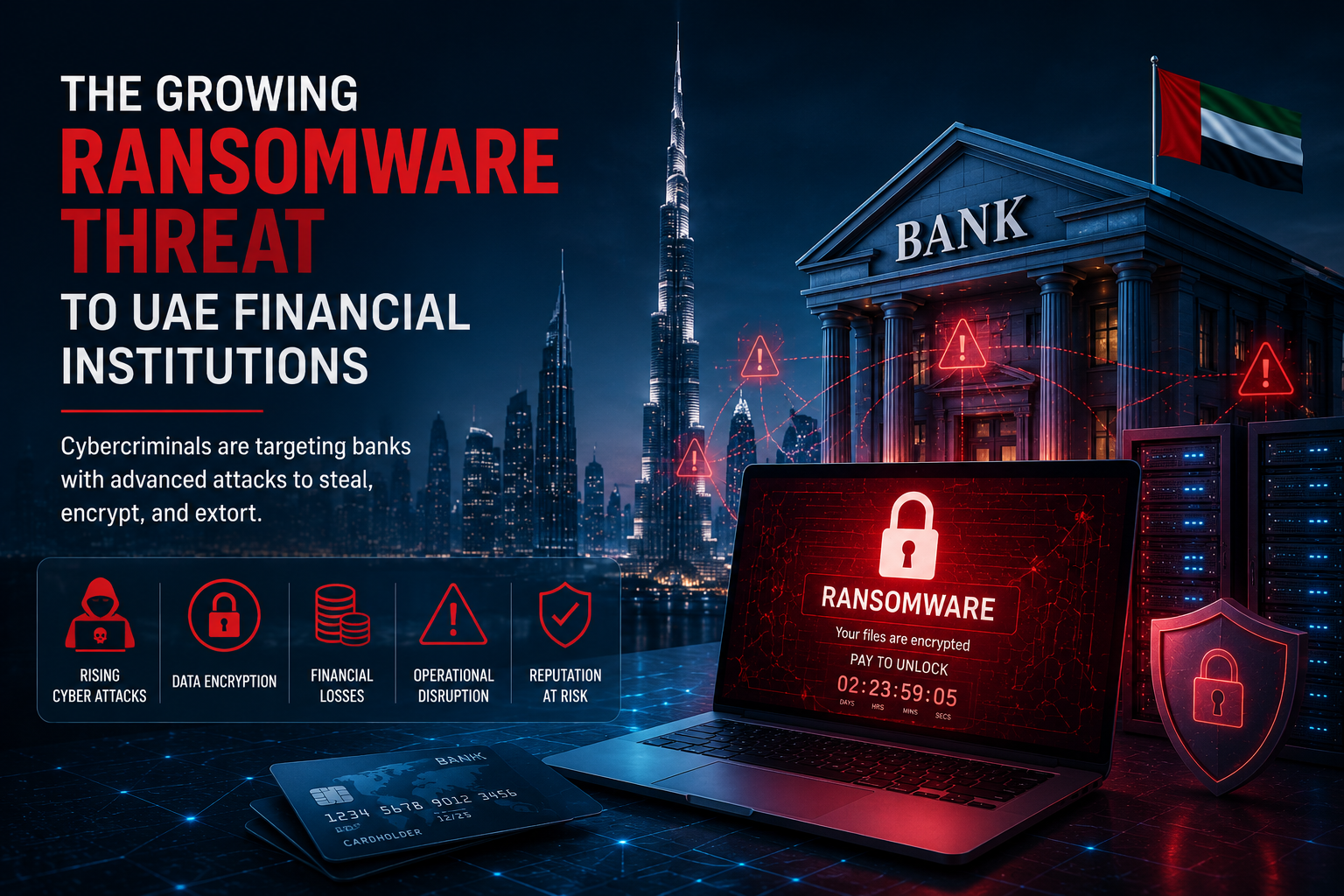
The Growing Ransomware Threat to UAE Financial Institutions
Cybercriminal groups increasingly view banks and financial organizations as high-value targets. These institutions process large volumes of transactions, manage confidential customer information, and depend on uninterrupted digital services to maintain business continuity.
Unlike conventional malware, modern ransomware campaigns are carefully planned. Attackers often spend weeks or even months inside a network gathering intelligence, escalating privileges, and identifying critical assets before launching an attack.
The Growing Ransomware Threat to UAE Financial Institutions
Common attack vectors include:
- Phishing and social engineering campaigns
- Compromised user credentials
- Unpatched software vulnerabilities
- Third-party supply chain compromises
- Remote access exploitation
- Insider threats
Once attackers gain access, they can move laterally across systems, disable security controls, encrypt data, and disrupt essential banking operations.
Why Traditional Antivirus Is No Longer Enough
Traditional antivirus solutions remain an important part of cybersecurity architecture. However, they were originally designed to identify known malware signatures rather than sophisticated attack techniques used by today’s ransomware operators.
Modern threat actors frequently deploy:
- Fileless malware
- Zero-day exploits
- Credential theft tools
- Living-off-the-land techniques
- AI-assisted attack methods
- Advanced evasion mechanisms
Because these attacks often avoid known malware signatures, they can bypass conventional antivirus tools without triggering alerts.
As a result, organizations that depend exclusively on antivirus software may not discover an intrusion until significant damage has already occurred.
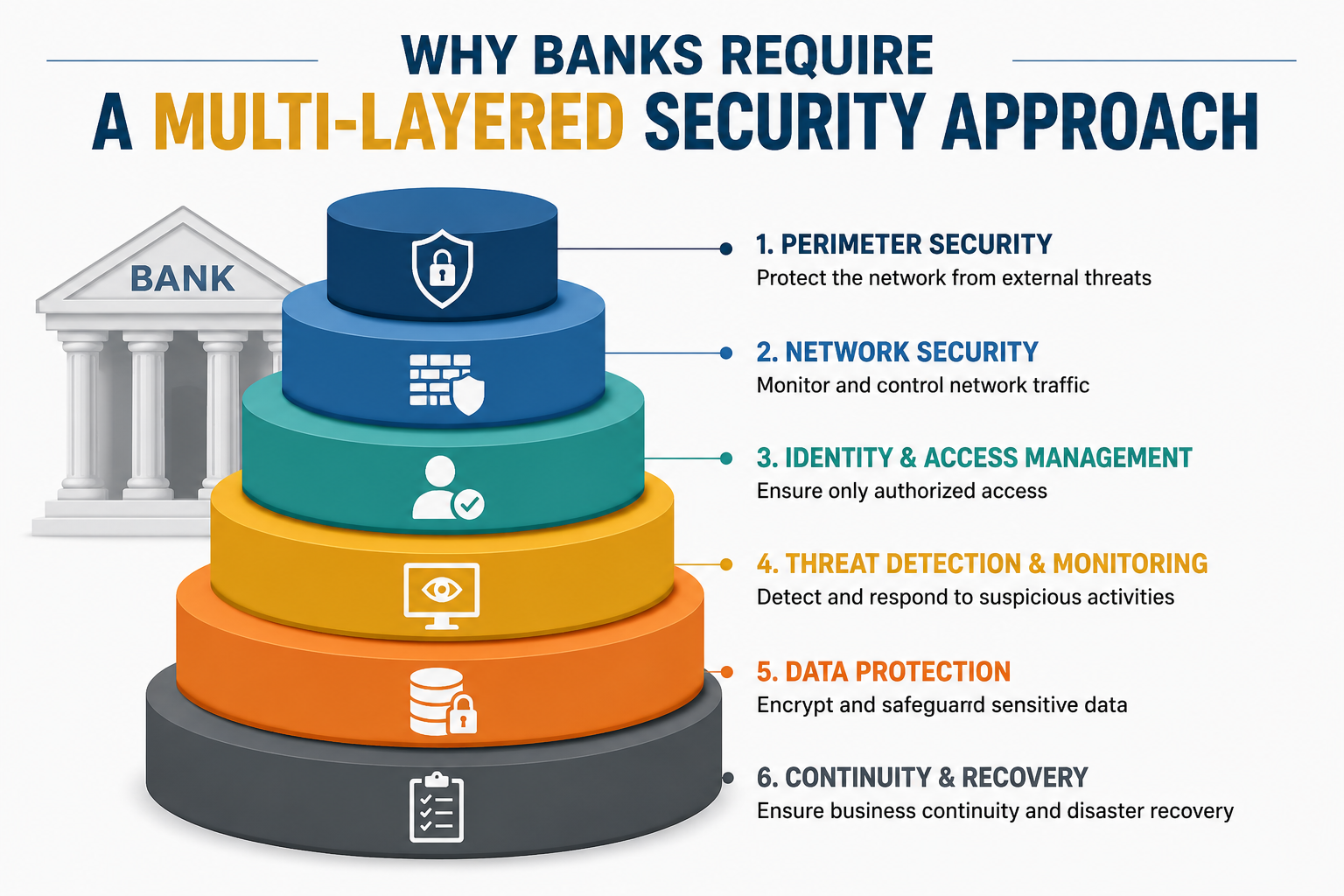
Why Banks Require a Multi-Layered Security Approach
Financial institutions cannot afford a reactive cybersecurity posture. Effective ransomware defense requires multiple layers of protection working together to identify threats before they impact operations.
Why Banks Require a Multi-Layered Security Approach
A modern banking cyber security strategy should include:
Advanced Endpoint Security
Endpoint Detection and Response (EDR) solutions continuously monitor devices and user activity, enabling security teams to identify suspicious behavior in real time.
24×7 Security Monitoring
Continuous monitoring through Security Operations Center (SOC) services helps organizations detect threats early and respond before attackers achieve their objectives.
Secure Backup and Recovery
Cyber resilience depends heavily on the ability to recover data quickly. Immutable backups, isolated backup environments, and regular recovery testing are essential components of ransomware preparedness.
Identity and Access Protection
Implementing multi-factor authentication, privileged access management, and strict access controls reduces the likelihood of unauthorized access.
Security Awareness Training
Employees remain a critical line of defense. Regular cybersecurity awareness programs help reduce the risk of phishing attacks and credential compromise.
Business Impact of a Ransomware Attack on Banks
The consequences of a ransomware incident extend far beyond the ransom demand itself.
Potential impacts include:
- Disruption of banking services
- Temporary unavailability of online banking platforms
- Delayed customer transactions
- Loss of customer confidence
- Regulatory investigations
- Recovery and remediation costs
- Long-term reputational damage
For organizations operating in the financial sector, even a short period of downtime can affect customer trust and business continuity.
This makes proactive investment in Cyber Security Protection for banks a strategic business decision rather than simply an IT requirement.
How Modern Cyber Security Services Help Banks Stay Protected
Today’s threat landscape requires more than standalone security tools. Organizations need integrated protection supported by skilled cybersecurity professionals and advanced monitoring capabilities.
Professional cyber security services UAE help financial institutions:
- Identify and remediate vulnerabilities
- Monitor threats around the clock
- Strengthen endpoint security
- Improve incident response readiness
- Enhance compliance posture
- Reduce operational risk
- Improve ransomware recovery capabilities
By adopting a proactive security model, banks can significantly reduce their exposure to cyber threats while maintaining customer confidence and regulatory compliance.
Conclusion
As ransomware attacks continue to become more sophisticated, the limitations of traditional antivirus solutions are becoming increasingly apparent. Financial institutions require a comprehensive cybersecurity framework capable of preventing, detecting, responding to, and recovering from advanced threats.
Investing in ransomware protection services UAE enables banks to strengthen cyber resilience, protect sensitive financial data, maintain regulatory compliance, and ensure uninterrupted customer services.
In an environment where cyber threats evolve daily, organizations that embrace a proactive and layered security strategy will be far better positioned to protect their operations and reputation in the years ahead.